

Can Spanaway Children’s Dentistry fix “shark teeth” (ectopic eruption) with early orthodontics?
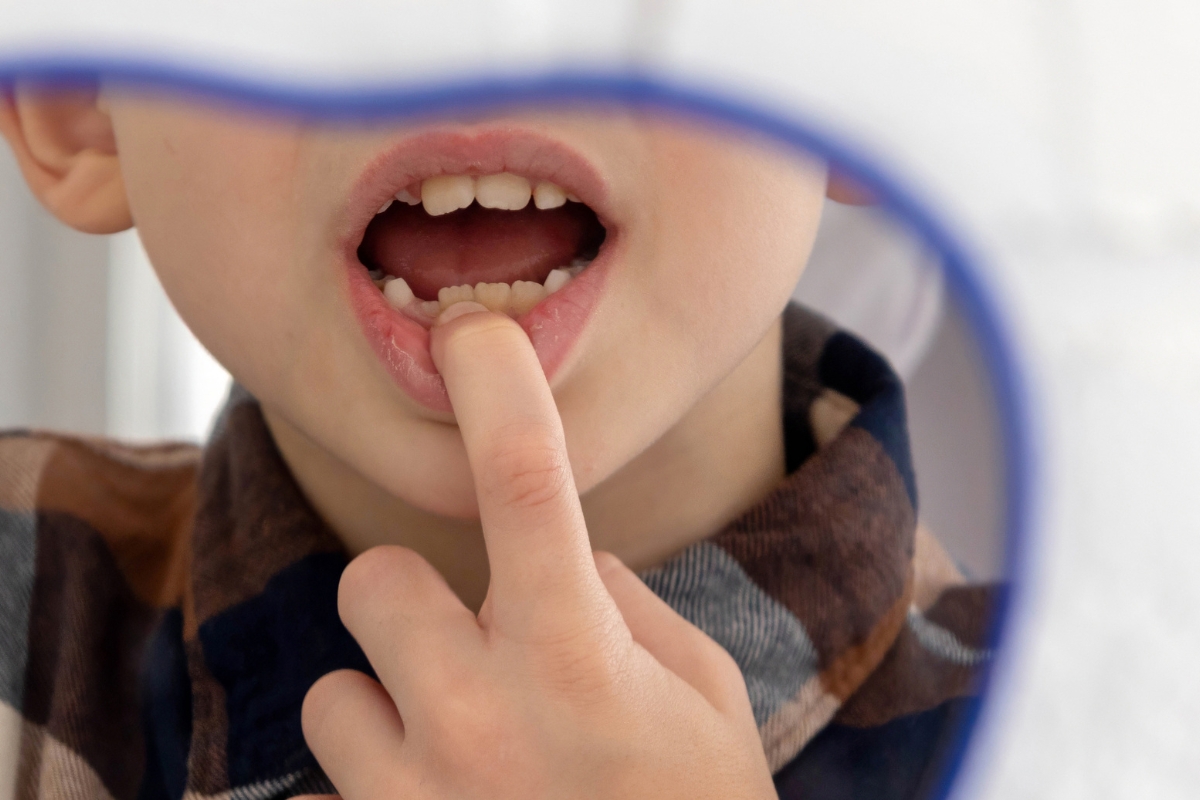
Few things stop a parent mid-scroll faster than noticing a second row of teeth growing behind their child’s baby teeth. It looks alarming. People call it “shark teeth”. But before the worry sets in too deeply, there’s important context to know: this is one of the most common dental surprises in childhood, and in most cases, it’s manageable with the right approach and timing.
What you do next, and how quickly you act, is what determines whether the situation resolves simply or becomes a longer orthodontic story.
What Is Ectopic Eruption and Why Does It Happen?
The clinical term for shark teeth is ectopic eruption – meaning a permanent tooth has come in at an unusual position rather than directly beneath and pushing out the baby tooth it’s meant to replace. Under normal circumstances, the pressure from the emerging adult tooth dissolves the baby tooth’s root, causing it to loosen and fall out. When that process doesn’t happen on schedule, the permanent tooth has no clear path and erupts wherever it can, usually behind the baby tooth.
This most commonly affects the lower front teeth in children between ages five and seven, though it can also appear in the upper front teeth or back molars, sometimes as late as age eleven or twelve. About 10% of children experience ectopic eruption, making it a well-documented part of normal dental development rather than a rare anomaly.
The most frequent cause is simply that the baby tooth root didn’t dissolve as expected. A lack of space in the jaw, a slight deviation in the adult tooth’s angle of eruption, genetic factors, or prior dental trauma can all contribute. None of these causes is the result of anything a parent did or didn’t do.
When Does It Resolve on Its Own and When Does It Need Help?
This is where the situation branches. In many cases, the baby tooth will eventually fall out on its own, and the permanent tooth will move into place, particularly when the baby tooth is already a little loose. Encouraging your child to wiggle it gently several times a day can speed things along. Many families find that within a few weeks, the baby tooth comes out and the adult tooth gradually shifts forward into its correct position naturally.
However, not every case resolves without intervention. If the baby tooth remains firmly in place and the permanent tooth continues erupting behind it, the adult tooth can become locked in a poor position. This is when a dental evaluation becomes important rather than optional.
At Spanaway Children’s Dentistry, a quick clinical exam and dental X-rays will show what’s happening beneath the gumline, whether the baby tooth root is still intact, where the permanent tooth is developing, and whether intervention is likely needed. That information guides everything else.
The Role of Orthodontic Treatment in Spanaway
When an ectopic eruption doesn’t self-correct, or when the position of the emerging permanent tooth indicates a broader spacing or alignment problem, early orthodontic intervention is the right conversation to have.
This type of early care is formally called Phase 1, or interceptive, orthodontic treatment, and it’s specifically designed for children who still have a mix of baby and permanent teeth, usually between ages 6 and 10. Rather than simply straightening teeth after all the adult teeth have come in, Phase 1 focuses on the underlying structure: jaw width, bite development, and eruption guidance. This phase usually lasts six to eighteen months and may involve limited braces, expanders, space maintainers, or other appliances.
The purpose is to create the right conditions for healthy dental development. Research published in PMC confirms that interceptive orthodontic treatment produces significant improvements in dental alignment and occlusion compared to children who received no early intervention during the mixed dentition stage. International orthodontic literature indicates that early intervention can significantly improve occlusal development, guide craniofacial growth, and reduce the severity of future malocclusions.
In simpler terms, addressing the right problems at the right age can reduce the amount of orthodontic work a child needs as a teenager and, in some cases, eliminate the need for a second phase of treatment altogether.
What Happens With Shark Tooth Cases
For ectopic eruption, the approach depends on what the evaluation finds:
- If the baby tooth is stubbornly retained, extraction is the most straightforward fix. Once the obstruction is removed, the permanent tooth often shifts forward naturally into the correct position within a few months.
- If there’s an underlying spacing issue: When the permanent tooth erupted out of position because there simply wasn’t enough room, a palatal expander or partial appliance may be used to create the necessary space and guide the tooth into alignment.
- If the tooth position requires active correction: In cases where the adult tooth has moved significantly off-course, orthodontic treatment in Spanaway addresses this directly, using targeted appliances to guide the tooth without waiting for problems to compound.
The key is that none of these responses need to be intensive or lengthy when they’re caught early. The same issue left unaddressed for years becomes a far bigger undertaking.
Act Sooner
The American Association of Orthodontists recommends that every child have an orthodontic evaluation by age seven. That recommendation exists because early evaluation isn’t about starting treatment for everyone – it’s about identifying the children who genuinely benefit from acting during a window that closes as jaw growth slows.
Early intervention can guide jaw growth, create space for permanent teeth, and reduce the risk of trauma to protruding front teeth, with benefits including shorter, simpler treatment later and the prevention of tooth extractions. Bones at this stage are more responsive to gentle guidance. The same correction that takes six months in a seven-year-old might require a different level of intervention entirely by age fourteen.
At Spanaway Children’s Dentistry, families across Spanaway, Washington, and the surrounding Pierce County area have access to this kind of proactive assessment under one roof – a genuine advantage over practices that refer out for every orthodontic question.
Shark teeth catch parents off guard, but they rarely stay complicated with the right care in place. If you’ve noticed a double row of teeth, or if your child is due for an orthodontic evaluation, schedule an appointment at Spanaway Children’s Dentistry today. A thorough assessment takes the guesswork out of the situation and gives you a real care plan.
People Also Ask
Do shark teeth always require orthodontic treatment?
Not always. Many cases resolve naturally once the baby tooth falls out, and the permanent tooth gradually shifts forward. Orthodontic treatment is typically considered when the baby tooth won’t budge, space is insufficient, or the permanent tooth’s position suggests a developing alignment problem.
Can shark teeth cause lasting damage if left untreated?
If the baby tooth stays in place and the permanent tooth continues erupting out of position, it can become fixed in a poor location, making correction more complex over time. Catching and addressing it early typically leads to simpler outcomes than waiting.
Is Phase 1 orthodontic treatment the same as getting braces?
Phase 1, also called interceptive treatment, uses appliances like expanders, space maintainers, or limited braces to address jaw and eruption issues while a child still has baby teeth. It’s targeted, not comprehensive, and usually shorter than full braces treatment.
At what age should my child have a first orthodontic evaluation?
The American Association of Orthodontists recommends an initial orthodontic evaluation by age seven. This doesn’t mean treatment will begin, but it allows early identification of issues that benefit most from timely action.
Can ectopic eruption happen with back molars, not just front teeth?
Yes. While the lower front teeth are the most common site, ectopic eruption can also affect the upper front teeth and upper first permanent molars. When it occurs in the back of the mouth, it’s often less visible but still worth evaluating promptly.