


Are Dental Sealants Necessary for Kids Who Brush Twice a Day?
Your child brushes every morning and night, rarely forgets to floss, and eats a reasonably balanced diet. Yet, during a dental appointment, you discover that a cavity is developing in one of their back teeth. How could this happen despite your efforts?
The answer often lies in the tiny grooves of children’s molars. These surfaces can trap bacteria and food particles that toothbrush bristles cannot completely remove. Dental sealants provide another layer of protection for these vulnerable areas.
At Spanaway Children’s Dentistry, our pediatric dentist, Dr. Atabakhsh, helps families understand how preventive treatments support children’s developing teeth. We consider each child’s dental health, cavity history, and oral development before recommending care.
If you are concerned about cavities, visit our dental office in Spanaway for an examination and personalized preventive guidance.
What Are Dental Sealants, and How Do They Prevent Cavities?
Dental sealants are thin protective coatings placed over the chewing surfaces of molars and certain other teeth. They create a barrier between tooth enamel and the bacteria responsible for decay.
Molars contain small pits and fissures that help grind food. Unfortunately, these grooves can be difficult to clean, even with careful brushing. Sealant material flows into those irregular surfaces before hardening into a protective layer.
According to the Centers for Disease Control and Prevention, sealants can prevent approximately 80% of cavities in back teeth during the first two years after application. They also continue providing meaningful protection afterward.
Sealants do not replace brushing or dental examinations. They strengthen an existing prevention routine.
Why Can Children Develop Cavities Despite Brushing Regularly?
Brushing twice daily is essential, but successful cavity prevention involves more than brushing frequency.
Several factors influence whether a child develops tooth decay.
Deep grooves in molars
Some children naturally have narrow or unusually deep grooves in their teeth. Plaque can remain inside these areas even when brushing techniques are appropriate.
Frequent snacking
Every time children consume fermentable carbohydrates, oral bacteria produce acids. Repeated exposure can gradually weaken enamel.
Newly erupted teeth
Permanent molars are especially vulnerable during eruption. Their position near the back of the mouth can make effective cleaning difficult.
Inconsistent brushing technique
Children may brush for two minutes but overlook their back teeth. Younger children often require assistance until they develop reliable brushing skills.
Our team evaluates these factors rather than assuming every cavity results from insufficient brushing.
At What Age Should Children Get Dental Sealants?
Many children become candidates when their first permanent molars emerge around age six.
These teeth develop behind the existing baby molars. Because they do not replace baby teeth, parents sometimes overlook their arrival.
The second permanent molars generally appear around age twelve. These teeth may also benefit from sealants soon after eruption.
However, age alone does not determine whether treatment is necessary.
Some younger children benefit from protective coatings on baby molars, particularly when their cavity risk is elevated.
At our Spanaway dental office, we examine the eruption pattern, groove anatomy, and condition of individual teeth.
The goal is to protect vulnerable surfaces before significant decay develops.
How Are Dental Sealants Applied to Children’s Teeth?
One reason parents appreciate sealant treatment is its straightforward application process.
Unlike a conventional filling, placing a sealant on healthy enamel normally requires no drilling or injection.
Here is what children can generally expect.
- Tooth cleaning: We remove plaque and debris from the chewing surface so the protective material can adhere properly.
- Surface preparation: The tooth is prepared using an appropriate conditioning material.
- Keeping the tooth dry: Cotton rolls or another isolation method help prevent saliva from interfering with bonding.
- Sealant placement: We apply the protective coating to the pits and grooves.
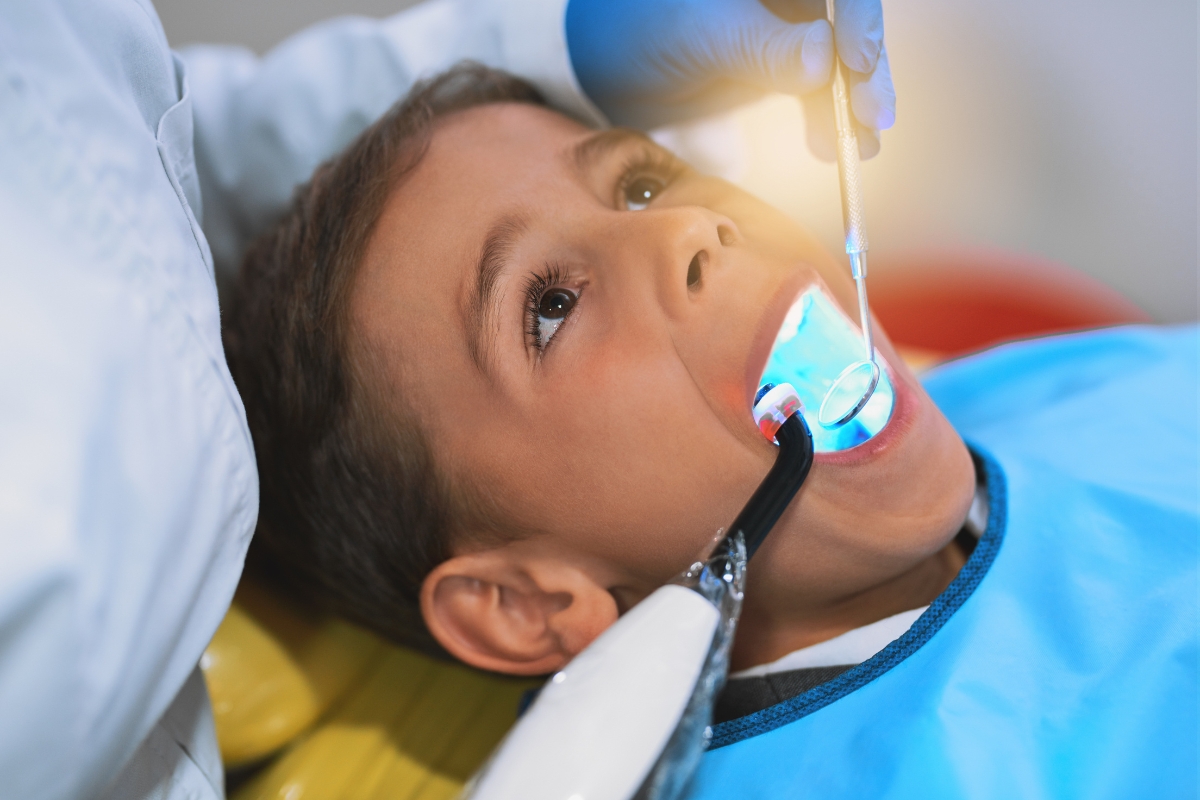
- Hardening: Depending on the material, the sealant is hardened using a curing light or allowed to set chemically.
- Final examination: We check the sealant’s coverage and ensure your child can bite comfortably.
Children can generally resume normal activities after treatment. Any material-specific instructions are explained before they leave.
Are Dental Sealants Safe for Young Children?
Dental sealants have been used in pediatric dentistry for decades. When professionally selected and applied, they are an established method of reducing cavities in susceptible teeth.
Some parents ask about the materials used in resin-based sealants. Certain products may contain compounds associated with extremely small, temporary BPA exposures.
Research and professional guidance indicate that these exposures are very low. Families can discuss specific materials and any concerns with their dental practitioner. We also assess whether the child can comfortably tolerate the procedure.
A child who has difficulty keeping their mouth open may need additional behavioral guidance or a different appointment approach. Safety, cooperation, and the condition of the tooth all influence treatment decisions.
Dental Sealants vs. Fluoride: Does Your Child Need Both?
Sealants and fluoride protect teeth differently. Fluoride strengthens enamel and supports remineralization, helping repair early mineral loss before a cavity forms.
Sealants create a physical barrier over grooves where bacteria and food particles accumulate. Consider a newly erupted molar with deep fissures. Fluoride helps strengthen its enamel, while a sealant protects the chewing surface from trapped debris.
For children with elevated cavity risk, both approaches may be beneficial. Our preventive services include professional cleanings, fluoride applications, and pit-and-fissure sealants.
Dr. Atabakhsh can discuss which combination makes sense based on your child’s examination. Treatment recommendations are based on clinical findings rather than applying every preventive procedure to every child.
Can Sealants Be Applied Over an Existing Cavity?
This depends on the stage of tooth decay. A sealant may help arrest an early, noncavitated lesion when the tooth can be adequately sealed and monitored.
However, an established cavity with significant structural damage generally requires restorative treatment. Placing a protective coating over a tooth without correctly diagnosing the condition could allow an untreated problem to progress.
That is why we examine each tooth before recommending sealants. If we identify a deeper cavity, we may discuss a tooth-colored filling or another restoration instead. Parents should understand the difference between preventing decay and repairing damage that has already occurred.
How Long Do Dental Sealants Last?
Sealants can provide protection for several years, although their lifespan varies. Chewing forces, tooth anatomy, material selection, and application conditions affect how well a sealant remains attached.
Occasionally, part of the protective coating wears away or breaks. This does not necessarily mean the tooth has developed a cavity. It does mean the surface should be examined.
During regular appointments, we check whether existing sealants remain intact. When necessary, we can recommend repairing or replacing them.
Parents should continue supervising daily brushing and flossing throughout this period. Sealants are one component of long-term cavity prevention, not a permanent substitute for oral hygiene.
Frequently Asked Questions
1. When should my child get their first dental sealants?
Most children benefit when permanent molars emerge around ages six and twelve. We assess each tooth individually because eruption timing, groove depth, previous cavities, and brushing ability matter more than age alone when recommending protection.
2. Does getting dental sealants hurt?
Usually not. Applying sealants does not involve drilling healthy tooth structure or injections. We clean and dry the tooth, place protective material, and allow it to harden. Most children tolerate the appointment very comfortably overall.
3. Can dental sealants protect baby teeth?
Yes, selected baby molars may benefit when their grooves trap food, and the child faces increased cavity risk. We examine the tooth and estimate how long it must remain before recommending a protective dental sealant.
4. How often do dental sealants need replacement?
Sealants can last several years, but wear or partial loss can happen. We check their condition during routine visits and recommend repairing or replacing protection when needed. Regular examinations help identify gaps before decay develops.
5. Does my child still need fluoride toothpaste after getting sealants?
Yes. Sealants protect chewing grooves, not every tooth surface. Children still need twice daily brushing with fluoride toothpaste, daily flossing where teeth touch, sensible snacks, and preventive appointments to protect their complete smile at home.
6. Can sealants stop an early cavity from progressing?
Sometimes. A carefully selected, noncavitated early lesion may be sealed to help stop progression. A tooth with a substantial cavity usually needs another targeted treatment. The decision depends on examination findings and sometimes dental X-rays.
7. Where can I find dental sealants for kids in Spanaway?
Contact Spanaway Children’s Dentistry for an examination. We will review your child’s cavity risk, check newly erupted molars, explain whether sealants are appropriate, and discuss preventive care alongside consistent brushing, flossing, and appropriate fluoride exposure.
Protect Your Child’s Growing Smile Before Cavities Develop
Healthy dental habits begin at home, but preventive appointments provide protection that brushing alone may not achieve. Dental sealants can help protect vulnerable molars while children develop stronger oral hygiene skills.
At Spanaway Children’s Dentistry, we focus on identifying potential problems early and explaining practical care options to families. Visit our dental office at 20709 Mountain Hwy E, Suite 102, Spanaway, WA 98387, or call (253) 294-7047 to schedule your child’s preventive dental appointment.