


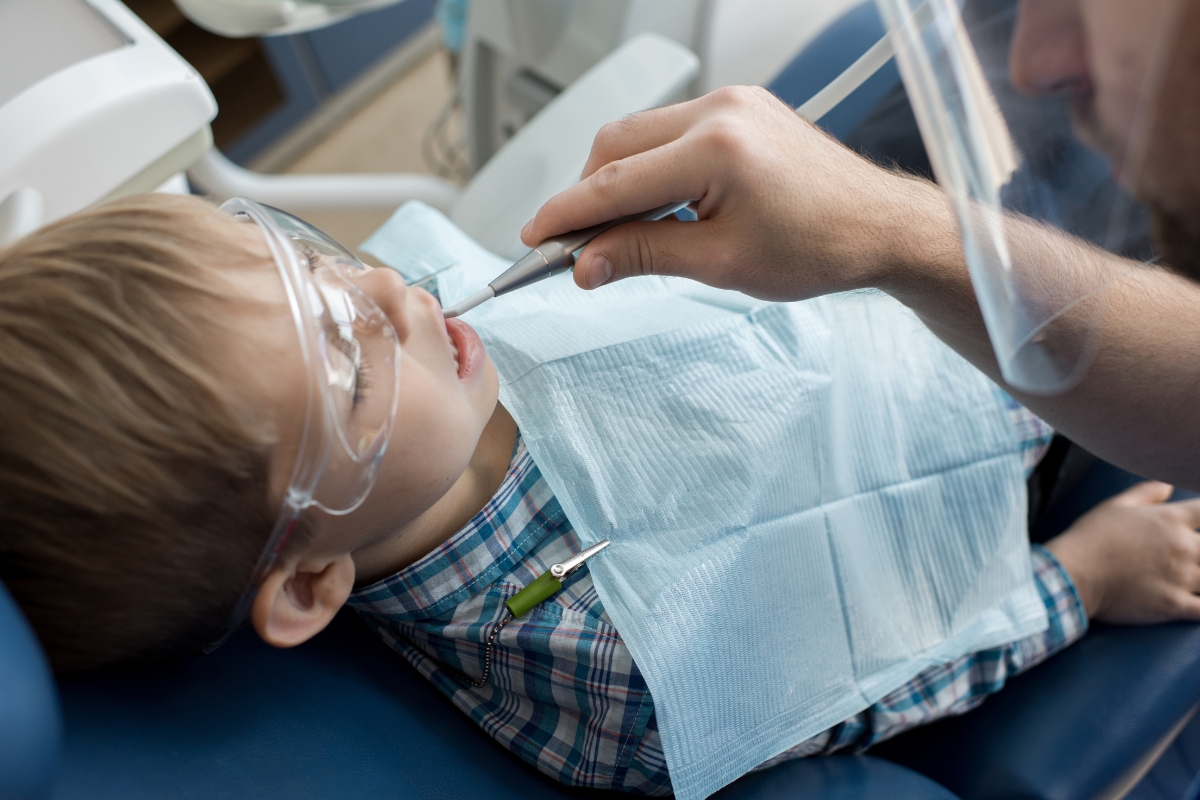
Is Dental Sedation Safe for Children Who Are Afraid of the Dentist?
Does your child become upset whenever you mention a dental appointment? Perhaps they cry, refuse to sit in the dental chair, or become overwhelmed by unfamiliar sounds and sensations.
Dental fear is common in childhood, but avoiding necessary treatment can allow cavities and other problems to progress. For certain children, sedation may be considered as part of an appropriate treatment plan.
At Spanaway Children’s Dentistry, our pediatric dentist, Dr. Atabakhsh, understands that children have different emotional, developmental, and dental needs. Our team emphasizes supportive communication and considers appropriate behavior guidance options when planning care.
If your child struggles with dental anxiety or has difficulty completing treatment, visit our Spanaway dental office to discuss an evaluation and available care approaches.
What Is Pediatric Sedation Dentistry?
Pediatric sedation dentistry uses medication to help selected children tolerate necessary dental procedures. Depending on the technique, sedation may reduce anxiety, change awareness, or support a child’s ability to remain still during treatment.
Sedation exists along a continuum, from minimal sedation to deeper levels of reduced consciousness. Different methods require different levels of assessment, monitoring, and professional training. Sedation should not be confused with local anesthesia.
Local anesthesia numbs a specific area to control procedural pain. Sedation primarily affects anxiety, awareness, or responsiveness.
Some procedures require both approaches. We encourage parents to understand these distinctions before agreeing to treatment. Sedation is not automatically necessary for children who feel nervous about dental appointments.
Why Might a Child Need Sedation for Dental Treatment?
Every child responds differently to the dental environment. Some children tolerate an examination but struggle with longer restorative procedures.
Others become distressed by sounds, sensations, or the need to remain still. Sedation may be considered when a child’s anxiety or cooperation prevents clinically necessary treatment.
Additional considerations can include:
- Extensive dental needs requiring prolonged appointments
- Significant fear associated with previous treatment
- Developmental differences affecting cooperation
- Certain sensory or behavioral challenges
- Medical or physical conditions that complicate treatment
- Difficulty tolerating necessary procedures safely
These circumstances do not automatically mean sedation is required.
We first consider the dental problem, urgency, medical history, and alternatives for behavior management. The decision should reflect the needs of the individual child rather than convenience alone.
Is Dental Sedation Safe for Young Children?
Sedation can be provided safely in appropriately selected patients when established protocols are followed. However, no sedation technique is entirely without risk.
The American Academy of Pediatrics and the American Academy of Pediatric Dentistry emphasize medical evaluation, airway assessment, professional training, monitoring, and recovery standards.
Potential complications vary with the technique and can include nausea, breathing problems, and changes in oxygen levels or cardiovascular function.
The child’s medical history is an essential part of evaluating risk. Sleep-disordered breathing, airway concerns, certain medications, and underlying health conditions may affect suitability.
Parents should receive an explanation of potential risks, expected benefits, and alternatives. Informed consent requires understanding the proposed treatment rather than simply signing a form.
Does Every Anxious Child Need Dental Sedation?
No. Many children complete dental treatment successfully with non-medication behavior guidance.
Children often respond positively when they understand what will happen and feel that the dental team is listening. We may use age-appropriate explanations to introduce instruments and procedures.
Some children benefit from a tell-show-do approach. This involves explaining an unfamiliar step, demonstrating what is appropriate, and then proceeding with the treatment.
Other options include positive reinforcement, distraction, gradual familiarization, or planned breaks. A short introductory visit may help certain children become more comfortable.
These strategies can be particularly useful for younger patients whose fear comes from unfamiliarity. The need for sedation should be evaluated after considering reasonable alternatives.
How Do Dentists Evaluate Children Before Sedation?
An appropriate pre-sedation assessment involves more than checking whether a child is nervous. The dental team reviews medical conditions, previous anesthesia experiences, medications, and relevant allergies.
Parents may be asked about snoring, breathing difficulties during sleep, recent respiratory illness, or previous complications. A focused airway examination can identify factors that may influence sedation risk.
The planned dental procedure is also important. The duration and complexity of treatment help determine whether sedation is appropriate.
Children with certain health conditions may need additional medical input or treatment in a different setting. We encourage families to provide complete and accurate information. Even details that seem unrelated to dentistry can affect treatment planning.
What Should Parents Do Before an Appointment?
Preparation instructions depend on the sedation method. Some techniques require specific fasting periods to reduce the risk of aspiration.
Other approaches may have different requirements. Parents should never assume that instructions for one sedation technique apply to another.
Follow the guidance provided by the treating team. If your child accidentally eats or drinks when fasting was required, contact the office before the procedure.
Do not conceal this information. Also report any new cough, fever, congestion, or respiratory symptoms.
A recent illness may change the safety assessment. Bring information about current medications and relevant medical diagnoses.
Explain the appointment to your child calmly without promising that they will sleep or remember nothing unless the clinical team has specifically explained that expectation.
Can Sedation Help Children With Sensory or Developmental Differences?
Some children have difficulty tolerating dental treatment because of sensory sensitivity, communication barriers, or developmental conditions. Bright lights, sounds, physical contact, and changes in routine can create significant distress.
A supportive treatment plan begins with understanding the child’s individual needs. Parents can explain which communication methods and accommodations have worked during previous medical visits.
For some children, environmental adjustments and gradual exposure may be sufficient. Others may require additional behavior guidance or medication-based support.
Sedation should not be viewed as the automatic solution for every child with developmental differences. The appropriate decision requires an individualized clinical and medical assessment. Our team welcomes discussions about accommodations and concerns before treatment planning.
Frequently Asked Questions
1. Is dental sedation safe for a five-year-old?
Sedation can be appropriate for some children after careful medical evaluation and consent. Safety depends on the technique, personnel, monitoring, and individual risk. We discuss benefits, alternatives, and specific precautions before recommending any sedation approach.
2. Will my child be completely asleep during dental sedation?
Not necessarily. Nitrous oxide often allows children to remain awake and responsive, while deeper techniques affect consciousness more substantially. We clearly explain the proposed method, expected responsiveness, and monitoring requirements before parents provide informed consent.
3. Can my child eat before a dental sedation appointment?
Instructions depend on the specific sedation technique and your child’s medical needs. Follow the written guidance you receive. If your child eats or drinks outside the permitted window, contact the team before arriving for safety.
4. What if my child has a cold before dental sedation?
Tell our team about fever, cough, congestion, asthma symptoms, or any recent illness before the appointment. Some conditions increase airway risk, and rescheduling may be appropriate. Never hide symptoms to keep a previously scheduled procedure.
5. Is sedation the same as numbing a child’s tooth?
Local anesthesia numbs the treatment area, while sedation addresses awareness, anxiety, or cooperation. A sedated child may still require local anesthetic for pain control. We explain how the techniques work together when relevant during treatment.
6. How long should my child rest after sedation?
Recovery depends on the medications and depth of sedation. Some children return to usual activities quickly, while others need monitoring and rest. Follow the discharge instructions and immediately contact the care team about unexpected symptoms.
7. Where can I discuss sedation dentistry for kids in Spanaway?
Start with an examination at Spanaway Children’s Dentistry. We will discuss your child’s anxiety, medical history, dental needs, and possible behavior guidance approaches. Ask our office which sedation services are currently available for your child.
Support Your Child’s Dental Health With an Informed Care Plan
Fear should not prevent children from receiving necessary dental care. However, sedation decisions must be based on careful evaluation, appropriate safeguards, and parental understanding.
We encourage families to ask questions and discuss all reasonable treatment approaches before proceeding. Schedule an appointment and discuss your child’s dental comfort needs.