


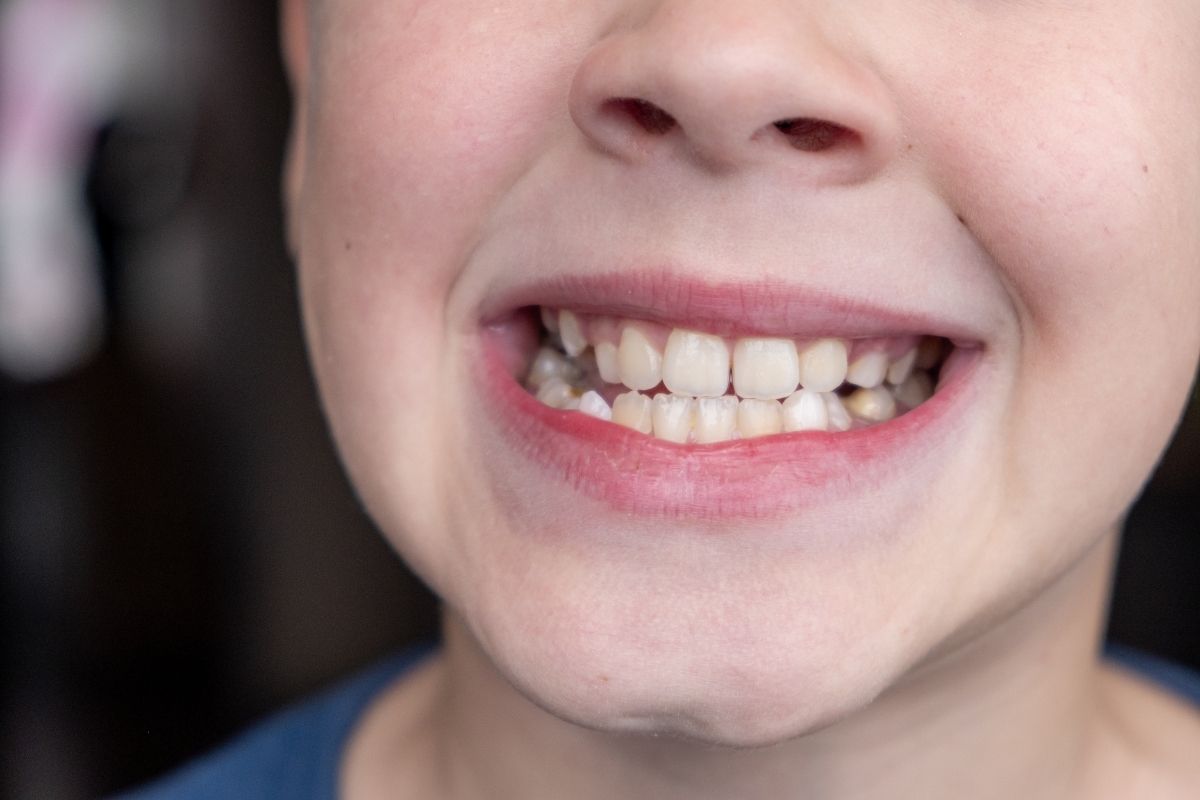
Does Your Child Need a Palatal Expander? Early Signs of a Crossbite
Have you noticed that your child’s upper and lower teeth do not line up properly when they bite? Perhaps their upper back teeth sit inside their lower teeth, or they shift their jaw sideways while chewing.
These observations may indicate a crossbite, a condition that sometimes develops when the upper dental arch is too narrow. Certain crossbites can be addressed during childhood with early orthodontic treatment, including an appliance called a palatal expander.
At Spanaway Children’s Dentistry, our pediatric dentist, Dr. Atabakhsh, helps families understand how developing teeth and jaws influence oral health. Our practice offers interceptive orthodontic treatment options for selected childhood alignment concerns. If your child has an uneven bite, crowded teeth, or unusual jaw positioning, visit our dental office in Spanaway for an evaluation.
What Is a Palatal Expander, and How Does It Work?
A palatal expander is an orthodontic appliance designed to widen the upper dental arch when clinically indicated. The upper jaw contains two halves connected by a developing midpalatal suture.
In growing children, certain expansion appliances can apply controlled forces that help increase the width of the upper jaw. This process may create additional space for teeth and improve the relationship between the upper and lower arches.
Different expander designs function in different ways. Some are attached to teeth, while others may be removable or use alternative attachment methods.
The choice depends on dental development, anatomy, and treatment goals. Not every child with crowded teeth or an uneven bite needs expansion. A comprehensive evaluation determines whether the appliance addresses the underlying problem.
What Is a Crossbite in Children?
A crossbite occurs when certain upper teeth close inside the corresponding lower teeth instead of fitting outside them normally. Crossbites may involve front teeth, back teeth, or multiple areas.
A posterior crossbite affects the relationship between upper and lower back teeth. In some children, the upper jaw is narrower than the lower arch, contributing to the problem.
A child may compensate by shifting the lower jaw sideways when closing their mouth. Over time, this functional shift can influence bite mechanics and may contribute to asymmetric growth patterns.
However, not every unusual bite has the same cause. Tooth position, jaw relationships, and eruption patterns all require examination. A palatal expander may be considered for particular crossbites associated with inadequate upper arch width.
What Signs Suggest Your Child Might Need Early Orthodontic Treatment?
Parents sometimes notice alignment problems before their children experience discomfort.
Watch for these possible warning signs:
- Upper back teeth biting inside the lower back teeth
- A lower jaw that shifts sideways during closure
- Noticeably narrow upper dental arches
- Significant crowding as permanent teeth emerge
- Difficulty achieving a comfortable bite
- Uneven tooth wear or repeated biting of the cheek
- Permanent teeth erupting into unusual positions
- An appearance of asymmetry when the child bites together
These findings do not establish that an expander is necessary. Some children have temporary irregularities during normal dental development.
Others require monitoring rather than immediate intervention. Our team evaluates the bite and considers whether the concern involves tooth position, jaw width, or another developmental factor.
At What Age Should Children Be Evaluated for a Palatal Expander?
The American Association of Orthodontists recommends an initial orthodontic evaluation no later than age seven. At this stage, many children have a mixture of primary and permanent teeth.
This allows clinicians to recognize certain developing bite problems while growth remains active. The recommendation does not mean every seven-year-old needs braces or an appliance.
Some children require no treatment. Others benefit from monitoring or timely intervention. The timing of palatal expansion depends on the child’s growth and skeletal development.
Our orthodontic service includes interceptive treatment that may begin around ages six or seven. Parents should arrange an earlier evaluation if they notice an obvious bite problem before that age.
How Can a Palatal Expander Correct a Crossbite?
When a crossbite results from a narrow upper arch, expansion can help improve the relationship between the jaws. A rapid palatal expander typically applies controlled forces through an appliance attached to the upper teeth.
In a growing child, these forces can influence the midpalatal suture and increase upper arch width. The treatment aims to achieve a more appropriate transverse relationship between the upper and lower dental arches.
Improving that relationship may reduce a functional jaw shift associated with the crossbite. However, the outcome depends on the child’s anatomy, age, and condition.
An expander is not a universal solution for every bite irregularity. Some problems require different orthodontic mechanics, observation, or referral for additional assessment.
What Happens During an Early Orthodontic Evaluation?
We begin by examining the child’s teeth, bite, and stage of dental development. Our dentist observes how the upper and lower teeth contact each other.
We also check for crowding, unusual eruption patterns, and jaw shifts during closure. Dental imaging or records may be recommended when necessary to understand the condition.
Parents can explain any concerns about chewing, jaw positioning, or changes noticed during growth. If an expansion appliance is being considered, the treatment plan should identify the specific problem it is intended to correct.
We also discuss alternatives and whether monitoring is appropriate. An early evaluation is valuable even when no immediate appliance is recommended. It establishes an opportunity to follow development and respond when necessary.
Is Getting a Palatal Expander Painful for Children?
Children may experience pressure or temporary soreness during the initial adjustment period. The sensations depend on the appliance and the prescribed activation schedule.
Some children also notice increased saliva, mild speech changes, or an unusual feeling when swallowing. These effects often improve as they become familiar with the appliance.
Significant pain, persistent irritation, or damage to the gums should not be ignored. Parents should contact the treating office if an appliance becomes loose or causes injury.
Children should never adjust the device beyond the prescribed instructions. Our team emphasizes clear communication about expected sensations and when professional assistance is needed. Understanding what is normal can make the adjustment period more manageable.
How Long Does Palatal Expansion Take?
There is no single treatment duration that applies to every child. The active expansion phase depends on the appliance, the amount of correction required, and the child’s response.
After the desired expansion is achieved, the appliance may remain in place for a retention period. This helps support stabilization while the tissues adapt.
The retention phase may last longer than the active adjustment phase. Follow-up appointments allow the treating clinician to check progress and identify complications.
Parents should avoid comparing their child’s schedule with another child’s treatment. An appliance that appears similar may be used for a different underlying problem. The recommended timeline should be based on the patient’s clinical findings and growth.
What Should Children Eat and Avoid With a Palatal Expander?
Certain foods can make cleaning more difficult or damage an appliance. The specific restrictions depend on whether the device is fixed or removable.
For fixed expanders, children are often advised to avoid very sticky, hard, or chewy foods that could loosen components. Cutting firmer foods into smaller pieces may improve comfort.
Children should continue eating a balanced diet that supports normal growth. Oral hygiene is especially important because food can accumulate around wires, bands, and appliance surfaces.
Parents should assist with brushing when necessary. The treating clinician may recommend particular cleaning tools or techniques. Contact the office if food repeatedly becomes trapped or the appliance develops a persistent unpleasant odor.
Will My Child Still Need Braces After Palatal Expansion?
Palatal expansion and braces address different aspects of orthodontic development. Expansion may help correct upper arch width and certain crossbites.
Braces or other orthodontic appliances primarily address tooth alignment and bite relationships. Some children receive expansion without needing additional orthodontic treatment.
Others require a later phase of care after more permanent teeth erupt. The need for additional treatment cannot always be predicted at the beginning.
We encourage parents to understand the specific objective of each recommended appliance. Early treatment should address an identified clinical problem rather than attempt to make every child’s teeth perfectly straight before adolescence.
Ongoing monitoring helps determine whether additional intervention becomes appropriate.
What Early Orthodontic Options Does Our Spanaway Practice Offer?
At Spanaway Children’s Dentistry, our orthodontic services include interceptive treatment for developing dental and bite concerns. Our website identifies rapid palatal expanders for posterior crossbites.
We also describe space maintainers for selected cases of premature primary tooth loss and habit appliances for certain oral habits. These services address different developmental problems.
A child with a narrow upper arch may require a different approach from a child who has lost a baby molar early. We evaluate the concern before discussing appropriate treatment.
Families from Spanaway, Graham, Puyallup, South Hill, and neighboring communities can contact our office to arrange an examination. The goal is to support healthy dental development through timely assessment and informed treatment decisions.
Frequently Asked Questions
1. At what age should my child be evaluated for a palatal expander?
A first orthodontic checkup is recommended by age seven, or earlier when concerns appear. An expander is considered only if an examination shows a problem such as a narrow upper arch or certain crossbites in children.
2. Does every child with crowded teeth need a palatal expander?
Not always. Some crowded teeth can be monitored or managed using other suitable orthodontic approaches. A palatal expander primarily addresses specific upper jaw width problems. We examine the bite before discussing appropriate individual appliance options.
3. Does a palatal expander hurt when it is adjusted?
Children may feel pressure or temporary soreness during adjustment, especially initially. Discomfort is usually manageable at home, but severe pain is not expected. Contact the dental team if the appliance causes injury or persistent discomfort.
4. How long does a child need to wear a palatal expander?
Treatment duration varies with the child’s growth, severity of the crossbite, appliance design, and response. The active expansion period may be shorter than the retention period. Follow the individual schedule provided by the treating clinician.
5. Can my child brush normally while wearing an expander?
Yes, maintaining clean teeth and appliance surfaces is essential. Brush around bands and wires carefully, follow cleaning instructions, and avoid foods likely to damage the appliance. Regular checks allow us to identify potential problems early.
6. Will palatal expansion eliminate the need for braces later?
Not necessarily. Some children need no additional treatment, while others may benefit from braces or aligners later. Early expansion addresses a particular developmental problem; it does not guarantee that future orthodontic treatment will be unnecessary.
7. Does Spanaway Children’s Dentistry provide palatal expanders?
Our practice lists rapid palatal expanders among its early orthodontic treatment options for posterior crossbites. Schedule an evaluation to discuss your child’s jaw development, bite, possible appliance needs, and appropriate regular follow up care visits.
Give Your Child’s Developing Bite the Attention It Deserves
Certain childhood alignment problems are easier to evaluate and address while growth is occurring. Early orthodontic assessment can identify whether a crossbite requires treatment now, monitoring, or intervention at a later stage.
At Spanaway Children’s Dentistry, we help parents understand their children’s developing teeth and available care options. Visit our office at 20709 Mountain Hwy E, Suite 102, Spanaway, WA 98387, or call (253) 294-7047 to schedule an early orthodontic evaluation for your child.